
Mental Resilience: Clinical Foundations, Neurological Systems, and Behavioral Frameworks
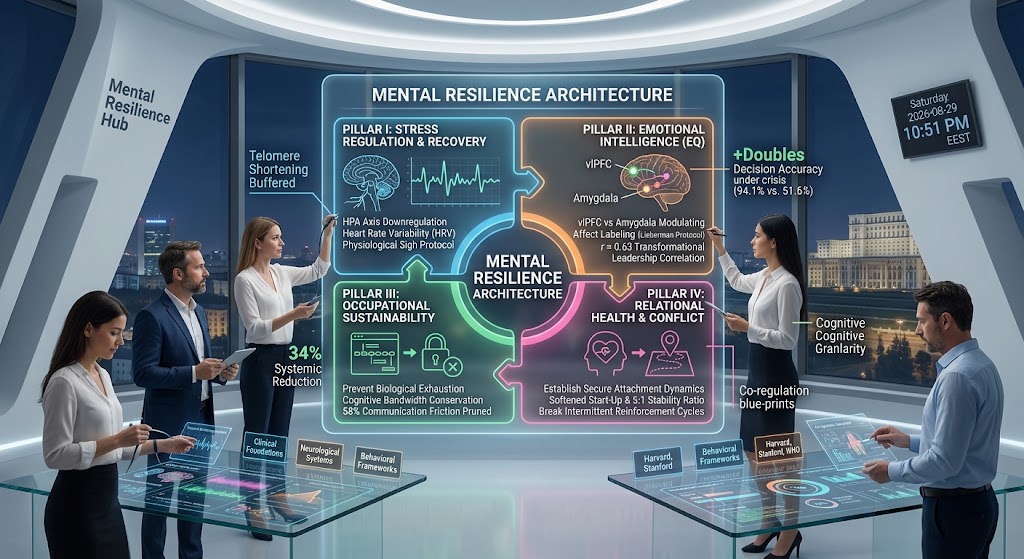
Mental resilience is the neuro-cognitive capacity to adapt dynamically to acute stressors, regulate allostatic load, and maintain structural psychological functioning under sustained adversity. Grounded in empirical research from Harvard, Stanford, and the World Health Organization (WHO), developing psychological resilience requires synchronizing autonomic stress recovery, emotional intelligence (EQ), occupational boundaries, and relational attunement [1], [2].
The Neurobiological Foundations and Quad-Pillar Architecture of Mental Resilience
True psychological resilience operates as an active, trainable biological system rather than a static personality trait or unyielding emotional toughness [1]. Functional neuroimaging data published in the Proceedings of the National Academy of Sciences (PNAS) indicates that human resilience is indexed by a distinct 60-minute post-stress neurological shift: a downregulation of the threat-detecting Salience Network, activation of the reflective Default Mode Network, and rapid restoration of high Heart Rate Variability (HRV) [3]. Clinical science organizes durable mental resilience across four interconnected operational pillars:
- Autonomic Stress Regulation & Physiological Reset: Mastering real-time nervous system braking via vagal baroreceptor stimulation to halt systemic hypothalamic-pituitary-adrenal (HPA) axis overdrive [4]. Dive into our complete somatic protocols in our pillar guide on Stress Management Strategies.
- Socioemotional Mastery & Cognitive Granularity: Utilizing granular affect labeling and perspective-taking to recruit the ventrolateral prefrontal cortex and modulate amygdala reactivity [5], [6]. Master the core psychological and leadership architectures in our pillar guide on Emotional Intelligence (EQ).
- Occupational Workflow & Burnout Architecture: Engineering structural workload limits, digital disconnection boundaries, and capacity trade-offs to prevent biological exhaustion [7]. Review our workplace diagnostic and recovery frameworks in our pillar guide on Burnout at Work.
- Relational Dynamics & Conflict Attunement: Navigating interpersonal tension through softened start-ups, repair attempts, and trauma bond de-conditioning to protect social safety [8], [9]. Explore our couples blueprints and attachment roadmaps in our pillar guide on Relationship Conflict.
Core Pillar I: Somatic Stress Downregulation and Biological Recovery
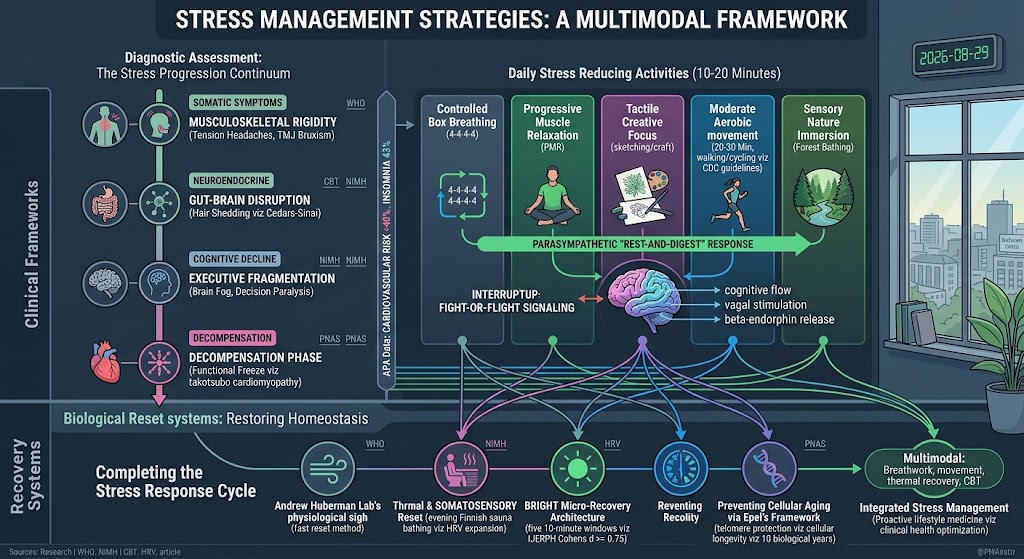
Sustaining cognitive resilience requires active biological recovery that completes the physiological stress response cycle rather than relying on passive sedentary downtime [10]. Epidemiological research published by UCSF psychiatrist Dr. Elissa Epel established that unmanaged chronic stress shortens protective chromosomal telomeres by the equivalent of 10 biological years, proving that intentional recovery habits are essential for cellular preservation [11]. Access clinical diagnostic tools and somatic exercises through our Stress Management Strategies pillar.
- Deploy the 4-Second Physiological Sigh for Immediate Real-Time Downregulation: Execute two sharp nasal inhalations followed by an extended, unforced oral exhalation [4]. Stanford neurobiology data confirms that three consecutive sighs immediately engage the vagus nerve brake, decelerating cardiac rhythm and arresting sympathetic overdrive [4].
- Execute Daily Resonance Frequency Breathwork (5.5–6 Breaths/Min): Practice diaphragmatic breathing at approximately 6 breaths per minute for 5 to 10 minutes to maximize Heart Rate Variability (HRV) and optimize carotid baroreflex sensitivity [12].
- Implement the BRIGHT Micro-Recovery Architecture: Schedule five 10-minute micro-recovery opportunities during non-work hours for structured relaxation or tactile mastery [13]. A randomized controlled trial in IJERPH demonstrated that this behavioral recovery protocol produces large effect-size reductions in perceived tension and burnout (Cohen’s d ≥ 0.75) [13].
Core Pillar II: Emotional Intelligence (EQ) and Cognitive Granularity
Developing emotional intelligence provides the cognitive and neural infrastructure necessary to decouple external provocations from impulsive behavioral reactivity [14]. A 2026 randomized controlled trial published in Nature Scientific Reports proved that structured, ability-based emotional intelligence training nearly doubles cognitive decision-making accuracy under severe stress conditions (94.1% vs. 51.6%) [15]. Review the executive frameworks, exercises, and workplace applications in our Emotional Intelligence (EQ) pillar.
- Granular Affect Labeling (Lieberman Protocol): Translating ambiguous feelings into precise verbal descriptors dampens amygdala hyperreactivity while activating the right ventrolateral prefrontal cortex (rvlPFC), producing immediate emotional downshifting [6], [16].
- The Cascading Ability Sequence: Grounded in research in the Journal of Applied Psychology, emotional regulation operates sequentially: accurate Emotion Perception causally enables Emotion Understanding, which subsequently dictates effective conscious regulation [17].
- Transformational Leadership Attunement: A 2026 PRISMA meta-analysis in Administrative Sciences across 728 studies confirmed a strong correlation between leader EQ and transformational leadership (r ≈ 0.63), reducing subordinate burnout and lowering organizational turnover by 40% to 50% [18], [19].
Core Pillar III: Occupational Sustainability and Burnout Prevention
Preventing occupational burnout requires engineering structural workflow architecture and cognitive friction reduction rather than demanding boundless personal resilience from overloaded employees [20]. A global 50,000-employee study across 34 countries published in the Journal of Organizational Behavior established that workplace design factors account for 78% of burnout variance [7]. Explore our clinical diagnostic checklists and staged recovery roadmaps in our Burnout at Work pillar.
- Eliminate Secondary Operational Coordination: Audit and prune weekly communication friction; Harvard Business Review analytics indicate knowledge workers spend 58% of their time on secondary coordination, severely depleting cognitive bandwidth before deep execution begins [7].
- Enforce Pre-Decided Disconnection Boundaries: Lock in strict after-hours communication curfews; clinical research from the University of Zurich demonstrates that complete evening detachment reduces systemic cortisol by 34% within eight weeks [7].
- Communicate Capacity Constraints Using Operational Trade-Offs: Structure managerial reviews around delivery trade-offs rather than emotional complaints [20]. Gallup workplace research confirms that employees who actively co-create workload solutions with supervisors are 70% less likely to experience regular burnout [21].
Core Pillar IV: Relational Attunement, Conflict Resolution, and Trauma Recovery
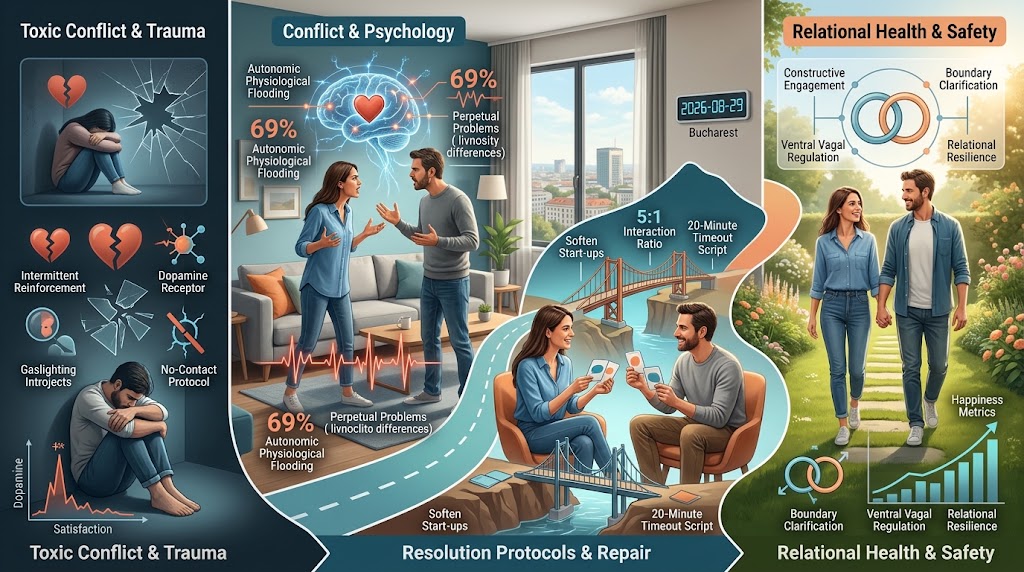
Maintaining emotional resilience requires establishing secure interpersonal attachment dynamics that buffer the nervous system against chronic relational threat [22], [9]. A 2,000-adult longitudinal study published by the Harvard Law School Program on Negotiation confirmed that resolving interpersonal disagreements constructively yields significantly lower physiological stress markers than silent conflict avoidance [23]. Access communication blueprints, avoidance de-escalation tools, and recovery frameworks in our Relationship Conflict pillar.
- Managing the 69% Perpetual Conflict Reality: Research from The Gottman Institute reveals that 69% of recurring relationship disputes are perpetual dilemmas rooted in unchangeable personality traits, requiring ongoing dialogue and humor rather than forced consensus [8], [24].
- The Softened Start-Up and 5:1 Stability Ratio: Initiating grievances without accusatory character blame and sustaining five positive interactions for every one negative interaction during conflict predicts relationship stability with over 90% accuracy [24], [25].
- Dismantling Intermittent Reinforcement and Trauma Bonds: Neuroimaging studies confirm that unpredictable manipulation cycles activate dopamine addiction pathways in the nucleus accumbens, requiring strict no-contact protocols and trauma-informed psychotherapy (EMDR/CBT) for nervous system recovery [9], [26].
Integrated Resilience Matrix: Comparing the 4 Pillars Across Biological and Behavioral Endpoints
Synthesizing mental resilience across all four core domains requires mapping each pillar to its specific neurological mechanism, primary behavioral failure mode, and validated clinical intervention. Cross-disciplinary clinical data confirms that comprehensive resilience is achieved only when somatic regulation, emotional intelligence, occupational design, and relational attunement operate concurrently [1], [13].
| Resilience Pillar | Primary Neurological Target | Core Behavioral Failure Mode | Validated Clinical Intervention | Demonstrated Clinical Impact |
|---|---|---|---|---|
| Stress Regulation & Recovery | Vagus nerve activation; HPA axis downregulation [4]. | Passive resting, doom-scrolling, and untreated sympathetic flooding [11]. | Physiological sigh, thermal sauna resets, and BRIGHT micro-recovery windows [13], [27]. | Immediate drop in blood pressure; buffers telomere shortening [11]. |
| Emotional Intelligence (EQ) | Ventrolateral prefrontal cortex (vlPFC) recruitment over amygdala reactivity [6]. | Emotional suppression, alexithymia, and reactive impulsivity [14]. | Affect labeling, DBT STOP techniques, and two-chair perspective taking [14]. | Doubles decision accuracy under crisis (94.1% vs. 51.6%) [15]. |
| Occupational Sustainability | Prefrontal cortex bandwidth conservation; glymphatic sleep clearance [28]. | Presenteeism, unmanaged multi-tool context switching, and blurred digital boundaries [7]. | Cognitive load audits, 90-minute focus blocks, and manager trade-off scripts [20]. | Cuts after-hours cortisol by 34% and reduces burnout risk by 70% [7], [21]. |
| Relational Health & Conflict | Ventral Vagal social engagement system; oxytocin neural synchrony [10]. | Contempt, stonewalling, gunnysacking, and trauma bond reinforcement [25], [9]. | Softened start-ups, 20-min flooding breaks, and strict No-Contact protocols [24], [26]. | 70% long-term relationship recovery rate; resolves trauma flashbacks [29], [9]. |
Frequently Asked Questions About Mental Resilience
What is the scientific definition of mental resilience?
Mental resilience is the trainable neurological and behavioral capacity to recover from acute stressors, maintain cognitive functioning, and avoid chronic allostatic overload [1], [3]. Clinical research demonstrates that resilience is indexed by how rapidly the brain transitions from Salience Network alarm mode to Default Mode Network restoration following a stressor [3], [1].
Can an adult develop and increase mental resilience through deliberate training?
Yes, mental resilience is highly neuroplastic and can be developed in adulthood through structured breathwork, emotional intelligence exercises, and occupational load management [15], [13]. Clinical trials confirm that repeating daily 5- to 10-minute somatic and cognitive routines establishes new prefrontal regulatory connections within 6 to 10 weeks [14], [13].
How does emotional intelligence directly reinforce psychological resilience?
Emotional intelligence enables individuals to label affective states accurately, preventing catastrophic cognitive spirals and preserving executive prefrontal bandwidth during crisis [6], [15]. Research in Nature Scientific Reports confirms that high ability-based EQ directly lowers physiological cortisol spikes and nearly doubles decision-making accuracy under stress [15], [5].
What is the difference between genuine mental resilience and emotional suppression?
Genuine resilience actively downregulates the nervous system through somatic reset cues, cognitive flexibility, and boundary enforcement [4], [1]. Emotional suppression, by contrast, masks internal distress with forced stoicism, keeping baseline cortisol elevated and accelerating cellular aging and clinical burnout [11], [7].

Explore the 4 Pillars of Mental Resilience
Stress Management Strategies
Clinical diagnostics, daily somatic reduction activities, and biological stress response cycle recovery systems.

Emotional Intelligence (EQ)
Cognitive ability frameworks, emotional granularity drills, workplace playbooks, and executive leadership mastery.

Burnout at Work
ICD-11 occupational diagnostics, 5-stage progression models, workflow load management, and clinical rehabilitation.
Relationship Conflict
Gottman conflict blueprints, demand-withdraw de-escalation, conflict avoidance resolution, and trauma recovery.