
Relationship Conflict: Psychological Dynamics, Resolution Protocols, and Relational Health
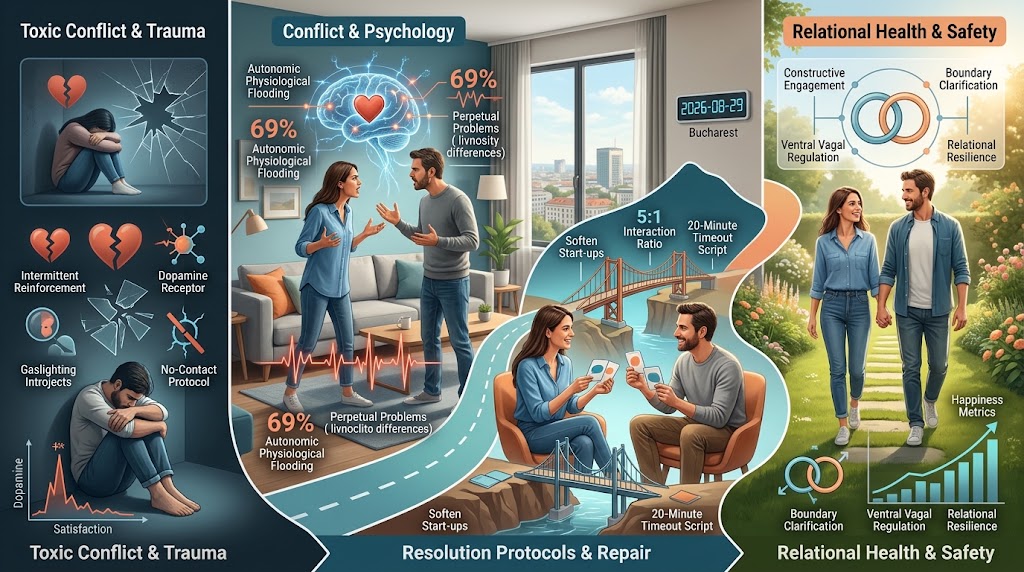
Relationship conflict is an inevitable interpersonal dynamic that emerges when differing needs, attachment schemas, or behavioral expectations create emotional tension between partners. Grounded in empirical data from The Gottman Institute and Harvard Law School, relationship longevity depends not on the complete absence of friction, but on how couples regulate autonomic flooding, dismantle silent avoidance, and repair emotional ruptures [1], [2].
The Neurobiology and Typology of Relationship Conflict
Interpersonal disputes operate across distinct biological and psychological categories rather than emerging as random emotional outbursts [3]. Longitudinal research conducted by Dr. John Gottman demonstrates that 69% of all relationship conflicts are perpetual problems rooted in fundamental personality differences, whereas only 31% represent solvable situational dilemmas [1], [4]. To master real-time de-escalation protocols and clinical repair strategies, consult our comprehensive guide on Conflict Resolution in Relationships.
- Autonomic Physiological Flooding: When an argument intensifies, heart rates frequently exceed 100 BPM, triggering adrenaline and cortisol surges that take the prefrontal cortex offline and disable cognitive empathy [5], [6]. Clinical trials indicate that empathetic negotiation is neurologically impossible during active fight-or-flight hyperarousal, necessitating a minimum 20-minute timeout [5].
- Solvable Situational Disputes: Friction focused on concrete, operational logistics—such as domestic labor allocation or scheduling—which can be resolved through structured behavioral trade-offs [4], [7].
- Perpetual Gridlocked Themes: Recurring arguments anchored in opposing core values, financial philosophies, or attachment styles that require emotional attunement and mutual acceptance rather than forced consensus [1], [8].
- The 5:1 Interaction Stability Ratio: Stable, enduring partnerships maintain a ratio of at least five positive verbal or non-verbal interactions for every one negative interaction during conflict discussions, creating an emotional buffer against contempt [6], [9].
The Danger of Conflict Avoidance and the Pursue-Withdraw Cycle
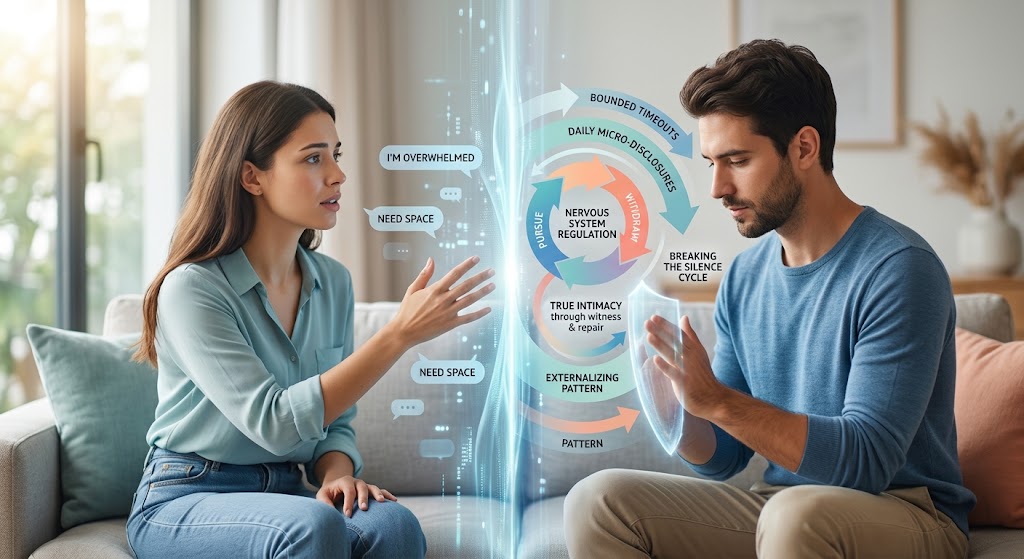
Suppressing disagreements under the guise of "keeping the peace" accumulates toxic relational debt that erodes romantic desire and emotional intimacy [10], [11]. A 2,000-adult longitudinal study published by the Harvard Law School Program on Negotiation confirmed that individuals who systematically sidestep interpersonal tension experience significantly higher physiological stress markers and lower relationship satisfaction than those who practice constructive engagement [2]. Learn how to dismantle emotional freeze responses and gunnysacking in our clinical roadmap on Avoiding Conflict in Relationships.
- Dismantle the Demand-Withdraw Spiral: Interrupt the dynamic where one partner's aggressive pursuit triggers the other's defensive withdrawal by agreeing on structured pauses with promised return times [12], [13]. Clinical research confirms that unannounced silent withdrawal is experienced by the brain as profound relational abandonment [12].
- Practice Low-Stakes Daily Micro-Disclosures: Voice minor preferences and mild boundaries immediately rather than stockpiling grievances into destructive "gunnysacking" outbursts [14], [15]. Clinical psychotherapists note that voicing micro-truths desensitizes the autonomic nervous system to conflict anxiety [16].
- Externalize the Conflict Pattern: Shift from personalized character accusations to examining the mutual interaction loop as a joint problem, moving from the reactive "Adaptive Child" to the "Functional Adult" [17], [13].
- Schedule Bi-Weekly State-of-the-Union Check-Ins: Conduct dedicated 30-minute alignment discussions during peaceful windows to clear unexpressed friction before resentment crystallizes [18], [19].
Toxic Conflict vs. Normal Friction: Trauma Bonds and Recovery Pathways
Distinguishing normal interpersonal conflict from chronic psychological abuse and intermittent manipulation is vital for physical and emotional safety [20]. Epidemiological research published in the American Journal of Preventive Medicine reveals that survivors of chronic psychological manipulation and gaslighting display post-traumatic stress symptoms equal in clinical severity to survivors of physical violence [20]. Explore our trauma-informed recovery protocols in our dedicated guide on Recovering from Toxic Relationships.
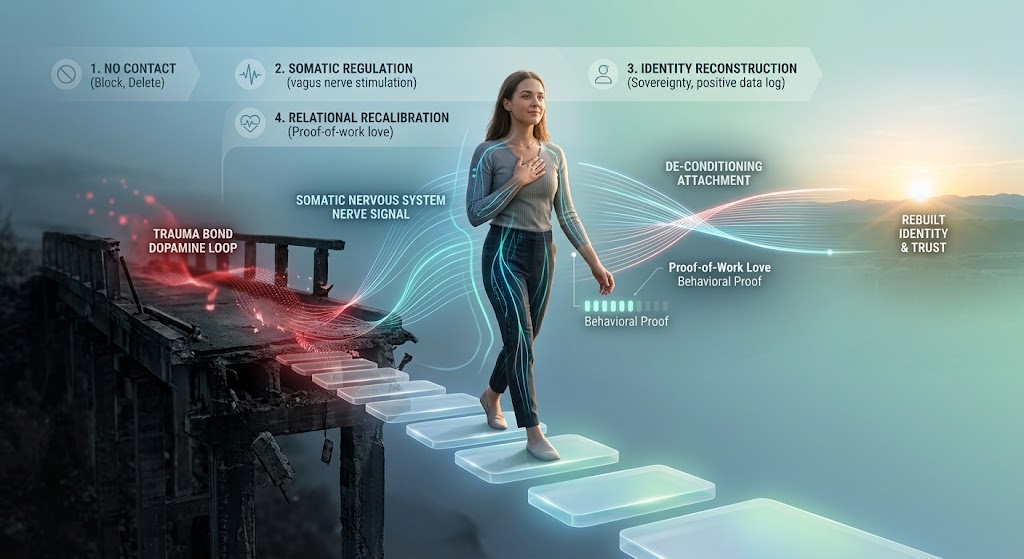
- Intermittent Reinforcement & Trauma Bonding: Unpredictable cycles of affection and cruelty condition the brain’s dopamine receptors in the nucleus accumbens identically to chemical substance addiction, making logical detachment extremely difficult [21], [20].
- Dismantling Gaslighting Introjects: Systematic cognitive restructuring and daily Positive Data Logging recalibrate distorted self-worth schemas created by chronic blame-shifting [20], [22].
- The Inflexible No-Contact Protocol: Complete cessation of communication is biologically required to break neurochemical trauma loops and allow the autonomic nervous system to exit sustained hypervigilance [23], [21].
- The 75/25 Somatic Boundary Principle: Sustainable relational rehabilitation requires maintaining 75% of conscious awareness on internal bodily sensations and personal needs while dedicating only 25% to external relational demands [24], [25].
Comparative Relational Matrix: Healthy Conflict vs. Conflict Avoidance vs. Toxic Dynamics
Accurate clinical staging between constructive disagreement, passive avoidance, and toxic manipulation is critical to select the correct relational intervention. Peer-reviewed data in Psychology Today confirms that while constructive conflict enhances intimacy and differentiation, avoidance produces emotional atrophy, and toxic conflict destroys baseline psychological safety [26], [20].
| Relational Parameter | Constructive Relationship Conflict | Chronic Conflict Avoidance | Toxic / Abusive Relational Dynamic |
|---|---|---|---|
| Primary Objective | Mutual understanding, boundary clarification, and collaborative problem-solving [26]. | Short-term tension reduction and preventing perceived confrontation [11]. | Power, control, psychological dominance, and evasion of accountability [20]. |
| Autonomic State | Ventral Vagal regulation with temporary, managed arousal [13]. | Dorsal Vagal freeze, emotional numbing, and somatic constriction [11]. | Chronic sympathetic hypervigilance, severe fight-or-flight dysregulation [20]. |
| Communication Style | Softened start-ups, direct "I" statements, and active attunement [4], [6]. | Deflection, minimizing ("it's fine"), and passive compliance [10]. | Contempt, gaslighting, projection, stonewalling, and personal attacks [6], [20]. |
| Repair Capacity | High; in-flight micro-repairs and apologies are accepted quickly [27]. | Suppressed; issues are buried rather than resolved [15]. | Weaponized; fake apologies (hoovering) followed by repeated boundary violations [21]. |
| Intervention Strategy | Structured Gottman blueprints, speaker-listener drills, EFT [28]. | Micro-disclosures, bounded timeouts, RAVE co-regulation [13]. | Strict No-Contact, EMDR, trauma therapy, and legal boundary enforcement [20], [29]. |
Frequently Asked Questions About Relationship Conflict
Is regular conflict in an intimate relationship normal or healthy?
Regular conflict is completely normal and can strengthen relationship intimacy when managed without contempt or personal attacks [3], [26]. Clinical research from The Gottman Institute shows that avoiding arguments entirely leads to emotional detachment, whereas resolving constructive disagreements builds relational resilience [1], [11].
What is the most accurate predictor of divorce during arguments?
Contempt—communicating through sarcasm, mockery, and eye-rolling from a position of superiority—is the single strongest predictor of relationship dissolution [6], [30]. Decades of observational research show that the presence of contempt predicts marital breakdown with over 93% accuracy unless actively countered by a culture of mutual appreciation [6].
Why do partners drop into silent treatment and emotional shutdown?
Emotional shutdown (stonewalling) occurs when acute physiological flooding triggers an autonomic freeze response rooted in deep subconscious shame or panic [11], [5]. Polyvagal Theory explains that when the nervous system perceives relational threat, the prefrontal cortex deactivates, making withdrawal an involuntary survival reflex until safety is re-established [20], [13].
How do you break a trauma bond with a manipulative or toxic partner?
Breaking a trauma bond requires strict, non-negotiable no-contact paired with bottom-up somatic nervous system regulation and trauma-informed psychotherapy [21], [20]. Clinical research proves that intermittent reinforcement schedules condition the brain like an addiction, requiring complete sensory disconnection to reset dopamine baseline and heal core attachment schemas [20], [23].

Related Cluster Articles

Conflict Resolution
A 5-step clinical protocol covering Gottman blueprints, softened start-ups, and repair attempts.
Avoiding Conflict
How to dismantle the demand-withdraw spiral, eliminate silent compliance, and build true emotional intimacy.
Toxic Relationship Recovery
A 5-phase clinical roadmap to break trauma bonds, regulate the nervous system, and reconstruct identity.