
Stress Recovery: Physiological Reset Protocols, Biomarkers, and Daily Restorative Systems
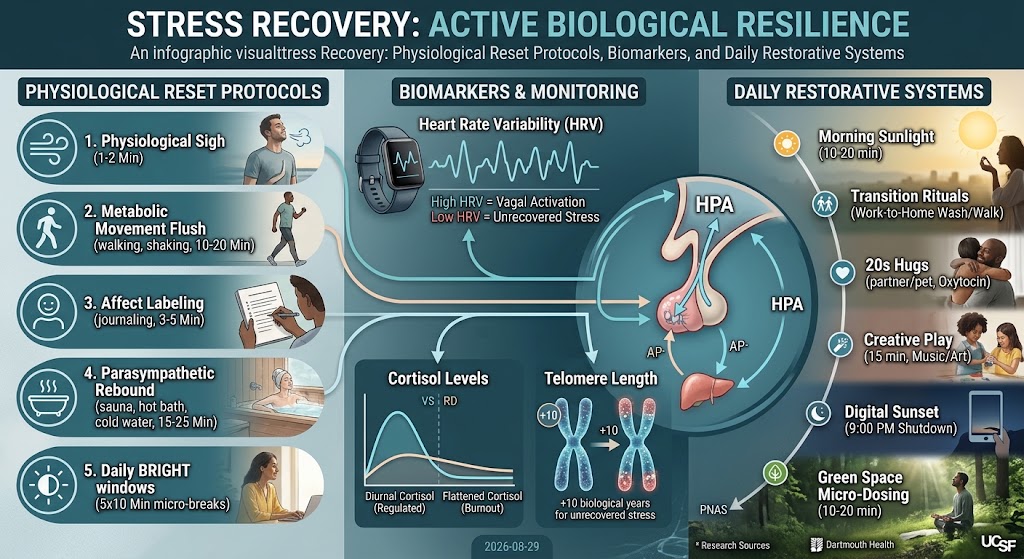
Stress recovery is the active physiological process of completing the biological stress response cycle and restoring homeostatic baseline across autonomic, endocrine, and neurological systems. Unlike passive downtime or sedentary media consumption, intentional recovery systematically closes open sympathetic loops, reduces elevated glucocorticoids, and prevents the cellular degradation associated with sustained hypothalamic-pituitary-adrenal (HPA) axis activation [1], [2].
Step-by-Step Execution Guide: Protocols to Complete the Stress Response Cycle
Completing the biological stress cycle requires deliberate physical, neurochemical, and cognitive cues that signal physiological safety to the brainstem and limbic circuitry [1]. Neuroimaging research published in the Proceedings of the National Academy of Sciences (PNAS) indicates that human brain reorganization transitions from alarm mode (Salience Network) to internal processing (Default Mode Network) over a 60-minute post-stress resilience window, making timed interventions vital for rapid autonomic stabilization [3].
- Deploy the Physiological Sigh for Immediate Real-Time Downregulation (1 to 2 Minutes): Execute two consecutive sharp inhalations through the nose to fully re-inflate collapsed pulmonary alveoli, followed by one extended, unforced exhalation through the mouth [4]. Performing three consecutive cycles activates the vagus nerve brake, producing an immediate deceleration in cardiac frequency and acute sympathetic arousal [4].
- Engage in a Metabolic Movement Flush (10 to 20 Minutes): Perform rhythmic, low-to-moderate physical activity such as brisk walking, body shaking, or mobility stretching to metabolize circulating adrenaline and cortisol [1], [4]. Research from Dartmouth Health and the CDC confirms that 20 minutes of daily walking stimulates endorphin synthesis and accelerates the clearance of stress hormones from vascular circulation [5], [6].
- Apply Affect Labeling and Cognitive Offloading (3 to 5 Minutes): Write a factual, single-sentence summary of the triggering event followed by the exact emotional state experienced without editorializing [4]. Clinical data from the American Institute of Stress demonstrates that verbalizing or writing emotions ("name it to tame it") decreases amygdala hyperreactivity and re-engages executive prefrontal control [5].
- Induce Parasympathetic Rebound via Thermal or Somatosensory Inputs (15 to 25 Minutes): Utilize post-work sauna exposure (80–90°C) or a hot bath, which elevates heart rate variability (HRV) and suppresses baseline cortisol during the subsequent cooling cascade [7]. Alternatively, apply tactile cold water to the wrists and neck for 30 seconds to trigger baroreceptor-mediated vagal stimulation [4].
- Establish Daily Structured Recovery Windows (BRIGHT Protocol): Schedule five 10-minute micro-recovery opportunities throughout off-job hours to engage in intentional relaxation or mastery behaviors [8]. Randomized controlled trial data published in IJERPH demonstrated that this behavioral recovery framework achieved large effect-size reductions in severe burnout, perceived stress, and anxiety (Cohen’s d ≥ 0.75) [8].
Action Plan and Daily Stress Recovery Toolkit
Sustaining biological resilience requires embedding active recovery practices into non-work hours rather than relying on occasional vacations. Epidemiological data published by UCSF researchers established that chronic unrecovered psychological stress accelerates chromosomal aging by shortening telomeres by the equivalent of 10 biological years [2], while a systematic meta-analysis by Albulescu et al. confirms that regular micro-breaks significantly improve vitality and reduce subjective fatigue [9].
1. Autonomic and Physiological Reset Routines
- Resonance Frequency Breathwork: Practice 4-7-8 or 5.5-breaths-per-minute pacing for 5 minutes twice daily to optimize cardiac baroreflex sensitivity and expand baseline heart rate variability [10], [5].
- Circadian Entrainment: Step into unshielded morning sunlight for 10 to 20 minutes within 30 minutes of waking to anchor the cortisol awakening response and program nocturnal melatonin release [11], [12].
- Work-to-Home Boundary Rituals: Implement a mandatory physical transition—such as washing your face, changing clothing, or taking a 10-minute phone-free stroll—to signal cognitive closure before entering domestic spaces [13].
2. Relational, Somatosensory, and Creative Outlets
- Deep Somatosensory Affection: Engage in a 20-second hug or physical embrace with a partner or pet; clinical data from the Gottman Institute indicates this duration triggers meaningful oxytocin release that downregulates blood pressure [1].
- Non-Evaluative Creative Play: Dedicate 15 minutes to low-demand creative tasks such as playing an instrument, gardening, or painting to silence mind noise and activate dopaminergic reward pathways [1], [8].
- Cathartic Emotional Release: Allow genuine crying when experiencing emotional heaviness; tears release stress hormones and activate parasympathetic neurochemical pathways that restore internal equilibrium [1], [13].
3. Biomarker Monitoring and Environmental Design
- Wearable HRV & Recovery Tracking: Track nightly HRV trends and resting heart rate on biometric wearables; a persistent 25–40% drop in HRV signals systemic unrecovered allostatic load [14], [10].
- Digital & Stimulant Elimination: Establish a strict 9:00 PM digital shutdown and eliminate afternoon caffeine past 2:00 PM to protect deep-wave sleep stages where growth hormone repairs neural tissue [14], [15].
- Green Space Micro-Dosing: Spend at least 10 to 20 minutes in natural outdoor environments without mobile devices to lower sympathetic tone and decrease salivary cortisol concentrations [9], [10].
Diagnostic Comparison: Passive Rest vs. Active Stress Recovery vs. Chronic Allostatic Burnout
Distinguishing between passive downtime, active physiological recovery, and severe chronic allostatic burnout is essential to ensure individuals apply targeted clinical interventions rather than unhelpful distraction habits. Research published in BMC Public Health (2025) indicates that passive screen use and binge-watching correlate with elevated anxiety and depression, whereas active recovery behaviors systematically repair neuroendocrine signaling [12], [8].
| Diagnostic Feature | Passive Rest (Sedentary Downtime) | Active Physiological Recovery | Chronic Allostatic Burnout |
|---|---|---|---|
| Primary Mechanism | Cessation of physical work while mental vigilance or media consumption persists [13], [12]. | Intentional vagal activation, cortisol metabolization, and stress cycle completion [1], [4]. | Hippocampal atrophy, blunted HPA negative feedback, and flattened diurnal cortisol [2], [11]. |
| Autonomic State | Low-grade sympathetic alert or cognitive hyper-focus [16], [10]. | Parasympathetic dominance ("rest-and-digest") with increased HRV [10], [7]. | Chronic sympathetic dominance or dorsal vagal functional collapse [10], [14]. |
| Biomarker Impact | Cortisol remains elevated; no significant change in HRV metrics [12], [13]. | Measurable reduction in salivary cortisol and blood pressure within 10–20 min [8], [9]. | Accelerated telomere shortening, elevated hs-CRP, suppressed testosterone [2], [11]. |
| Typical Experience | Couch resting, TV watching, or social media scrolling leaving the mind foggy [12], [13]. | Breathwork, physical shaking, nature walks, sauna, or structured art [1], [8]. | Waking exhausted at 3:00 AM, deep anhedonia, and emotional numbness [14], [2]. |
| Resolution Timeline | Immediate distraction that fades the moment external demands resume [13]. | Autonomic stabilization achieved within 15–60 minutes post-routine [3], [8]. | Requires 6 to 12 weeks of structured physiological rehab or clinical psychotherapy [14], [17]. |
Frequently Asked Questions About Stress Recovery
Why does traditional passive resting fail to resolve chronic mental fatigue?
Passive resting stops external physical output but leaves the nervous system and brain in an alert, vigilant state that fails to downregulate circulating glucocorticoids [13], [2]. Research shows that chronic stress structurally damages the hippocampal feedback mechanism required to halt cortisol release, necessitating active somatic cues rather than sedentary screen time [2], [10].
What is the optimal breathing rhythm to maximize Heart Rate Variability (HRV)?
Slow resonance breathing at approximately 5.5 to 6 breaths per minute maximizes heart rate variability and stimulates parasympathetic tone [10]. Clinical research confirms that prolonged exhalations stimulate the carotid baroreceptors, producing rapid reductions in arterial blood pressure and acute anxiety [4], [10].
How does sauna bathing facilitate neurological stress recovery?
A 20- to 30-minute sauna session at 80–90°C triggers a powerful post-session parasympathetic rebound that suppresses baseline cortisol and elevates HRV for several hours [7]. Studies in Complementary Therapies in Medicine demonstrate that frequent thermal exposure upregulates cellular heat-shock proteins and improves systemic autonomic resilience [7], [14].
When should unrecovered stress symptoms be evaluated by a healthcare professional?
Unrecovered stress should be medically evaluated when severe insomnia, unrefreshing sleep, physical panic episodes, or deep emotional anhedonia persist continuously for over two weeks [5], [16]. Health authorities at WHO and Johns Hopkins emphasize that persistent symptoms indicate neuroendocrine dysregulation requiring clinical psychotherapy or diagnostic laboratory screening [5], [16].