
Signs of Stress: Clinical Symptoms, Diagnostic Framework, and Health Effects
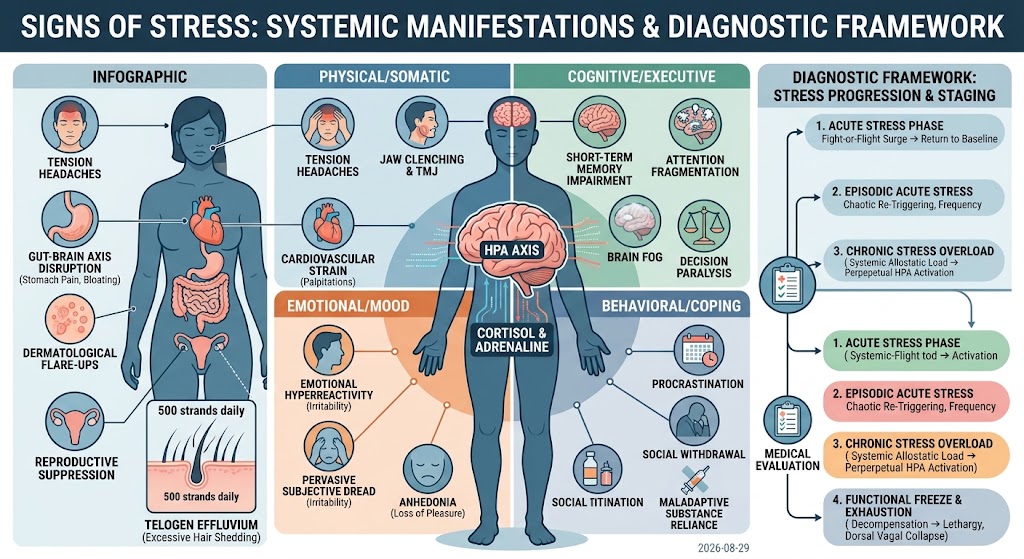
Signs of stress manifest across physical, cognitive, emotional, and behavioral systems when environmental demands overwhelm an individual’s physiological coping capacity. Formally categorized by the Mayo Clinic and Cleveland Clinic, sustained activation of the hypothalamic-pituitary-adrenal (HPA) axis elevates cortisol and adrenaline, producing symptoms ranging from tension headaches and digestive dysfunction to severe emotional exhaustion [1], [2].
Comprehensive Symptom Checklist: Physical, Cognitive, Emotional, and Behavioral Signs
Identifying the signs of stress requires evaluating systemic alterations across multiple bodily and psychological networks rather than focusing solely on emotional strain [3]. Epidemiological data from the American Psychological Association (APA) reveals that chronic stress increases the risk of cardiovascular disease and arrhythmias by 40%, with 43% of stressed adults experiencing chronic insomnia and 38% reporting stress-induced appetite disruptions [4].
1. Physical and Somatic Symptoms
- Tension Headaches and Muscle Rigidity: Persistent contraction in the neck, trapezius, and scalp muscles creates a constricting "band-like" pressure around the forehead and temples [4], [5].
- Jaw Clenching and Bruxism: Unconscious daytime clenching or nocturnal tooth grinding results in severe temporomandibular joint (TMJ) soreness, earache, and dental enamel wear [5], [6].
- Gut-Brain Axis Disruption: Cortisol surges alter gastrointestinal motility, triggering stomach pain, nausea, bloating, and irregular bowel patterns (diarrhea or constipation) [7], [8].
- Telogen Effluvium (Excessive Hair Shedding): Clinical research from Cedars-Sinai shows that high physiological stress forces hair follicles into a premature resting phase, causing individuals to shed up to 500 strands daily compared to the normal baseline of 100 [7].
- Cardiovascular Strain and Palpitations: Sympathetic nervous system overdrive elevates resting heart rate, accelerates blood pressure, and induces fluttering chest sensations [2], [9].
- Dermatological Flare-ups and Hives: Neuroendocrine activation stimulates histamine and sebum release, worsening eczema, psoriasis, and stress-induced urticaria (rashes) [2], [4].
- Reproductive & Endocrine Suppression: Elevated cortisol disrupts hypothalamic-pituitary-gonadal pathways, causing reduced libido, erectile dysfunction, and secondary amenorrhea (missed menstrual cycles) [7], [10].
2. Cognitive and Executive Function Markers
- Short-Term Memory Impairment: Cortisol saturation in the prefrontal cortex and hippocampus interferes with working memory consolidation and information retrieval [7], [11].
- Attention Fragmentation & Brain Fog: Inability to sustain focus on complex operational tasks, leading to frequent distractibility and slower cognitive processing [1], [12].
- Decision Paralysis: Difficulty prioritizing routine choices, accompanied by obsessive rumination over negative outcomes [13], [6].
3. Emotional and Mood Indicators
- Emotional Hyperreactivity: Heightened amygdala sensitivity resulting in sudden irritability, tearfulness, or anger triggered by minor daily inconveniences [1], [14].
- Pervasive Subjective Dread: Persistent feelings of apprehension and nervousness, even in the absence of an immediate external threat [10], [15].
- Anhedonia and Emotional Flattening: Loss of enthusiasm or pleasure in previously rewarding hobbies, social interactions, or personal achievements [10], [16].
4. Behavioral and Coping Alterations
- Procrastination and Task Avoidance: Putting off critical responsibilities due to executive depletion and fear of failure [12], [11].
- Social Withdrawal: Canceling social commitments and isolating from support systems to avoid emotional overstimulation [1], [2].
- Maladaptive Substance and Habit Reliance: Increasing intake of caffeine, alcohol, tobacco, or compulsive digital scrolling to suppress chronic internal tension [2], [11].
Diagnostic Framework: Staging and Evaluating Stress Progression
Evaluating the severity of stress requires mapping symptoms across distinct clinical phases to distinguish adaptive acute reactions from pathological chronic distress. Clinical protocols outlined by the Cleveland Clinic and Mayo Clinic classify stress progression based on duration, systemic impact, and recovery capacity [2], [17].
- Acute Stress Phase (Short-Term Adaptive Reaction): The body mounts an immediate fight-or-flight response to an identifiable external challenge (e.g., public speaking, near-miss accident). Hormones surge temporarily and return to baseline within hours once the stressor passes, causing zero long-term organ damage [2], [5].
- Episodic Acute Stress Phase (Frequent Re-Triggering): Acute stress reactions occur on a recurring, chaotic basis without adequate recovery intervals (frequently observed in emergency personnel and high-pressure executives). Symptoms manifest as frequent tension headaches, persistent irritability, and episodic sleep disturbances [2].
- Chronic Stress Overload Phase (Systemic Allostatic Load): Stressors persist continuously over months (e.g., toxic relationships, financial distress, unmanageable workloads). The HPA axis remains perpetually engaged, resulting in immune suppression, high blood pressure, and gastrointestinal inflammation [2], [17].
- Functional Freeze & Exhaustion (Decompensation): The nervous system shifts into dorsal vagal collapse when allostatic load exceeds physiological capacity. Characterized by profound lethargy, emotional numbness, unrefreshing sleep, and elevated risk of clinical depression and Takotsubo cardiomyopathy [18], [10].
- Medical Evaluation and Differential Diagnosis: Primary care physicians and mental health professionals administer clinical symptom inventories to rule out overlapping medical conditions—such as hypothyroidism, anemia, and cardiac arrhythmias—before establishing targeted intervention plans [2], [8].
Diagnostic Comparison: Acute Stress vs. Chronic Stress vs. Generalized Anxiety Disorder
Differential diagnosis between short-term acute stress, prolonged chronic distress, and diagnosable Generalized Anxiety Disorder (GAD) is essential to determine whether lifestyle adjustments or formal psychiatric treatment is required. Clinical guidelines from the Australian Institute of Health and Welfare and WebMD emphasize that while stress is tied to external situational triggers, anxiety disorders persist autonomously even after stressors are removed [19], [11].
| Diagnostic Feature | Acute Stress Reaction | Chronic Stress Overload | Generalized Anxiety Disorder (GAD) |
|---|---|---|---|
| Trigger & Onset | Identifiable, immediate external event or deadline [2]. | Ongoing, unresolved environmental pressures lasting weeks to months [2], [11]. | Internalized, excessive worry often occurring without an active external trigger [19]. |
| Biological Mechanism | Short adrenaline spike; quick return to homeostasis [17]. | Sustained HPA axis hyperactivation with chronic cortisol elevation [17], [15]. | Neurotransmitter dysregulation and chronic amygdala hyperreactivity [19], [8]. |
| Primary Somatic Signs | Rapid heart rate, momentary sweating, rapid breathing [14]. | Tension headaches, TMJ jaw clenching, hair loss, digestive issues [7], [5]. | Chronic motor restlessness, trembling, shortness of breath, dizziness [19]. |
| Reversibility with Rest | Resolves fully after resting or when the situation ends [5]. | Requires multi-week structural changes; weekends provide only temporary relief [16], [20]. | Does not resolve with rest alone; persists across vacations and low-demand periods [19]. |
| Clinical Status & Care | Normal physiological coping mechanism [2]. | Health risk factor requiring lifestyle medicine and boundary modifications [17]. | DSM-5 / ICD-11 Diagnosable Mental Health Disorder requiring CBT and/or pharmacotherapy [19]. |
Frequently Asked Questions About Signs of Stress
What are the earliest physical signs of stress in the body?
The earliest physical signs of stress typically include tension headaches, jaw clenching, sleep onset insomnia, and persistent neck or shoulder stiffness [1], [5]. Clinical research from Cedars-Sinai and Mayo Clinic indicates that these somatic markers emerge as the autonomic nervous system braces for perceived threats before conscious awareness of stress occurs [17], [7].
How does chronic stress physically cause digestive issues and stomach pain?
Stress hormones disrupt the bidirectional gut-brain axis, diverting blood flow away from the digestive tract toward skeletal muscles during fight-or-flight activation [4], [7]. This neuroendocrine shift alters colonic contraction speed, resulting in nausea, bloating, diarrhea, or constipation, and frequently exacerbates chronic conditions like Irritable Bowel Syndrome (IBS) [7], [8].
What is the clinical difference between acute stress and chronic anxiety?
Acute stress is an adaptive reaction to an identifiable external challenge that subsides once the situational demand resolves [2], [19]. Chronic anxiety is an internalized clinical disorder characterized by persistent, autonomous worry that continues long after external stressors have ended, significantly impairing daily life functioning [19], [8].
Can severe stress trigger cardiac symptoms that mimic a heart attack?
Yes, extreme emotional distress can trigger Takotsubo cardiomyopathy ("broken heart syndrome") or severe heart palpitations that present with symptoms virtually identical to a myocardial infarction [10], [1]. The American Heart Association advises that sudden chest pain accompanied by shortness of breath, radiating pain, or dizziness must be treated as an immediate emergency to rule out acute coronary syndromes [1], [4].