
The Unseen Crisis
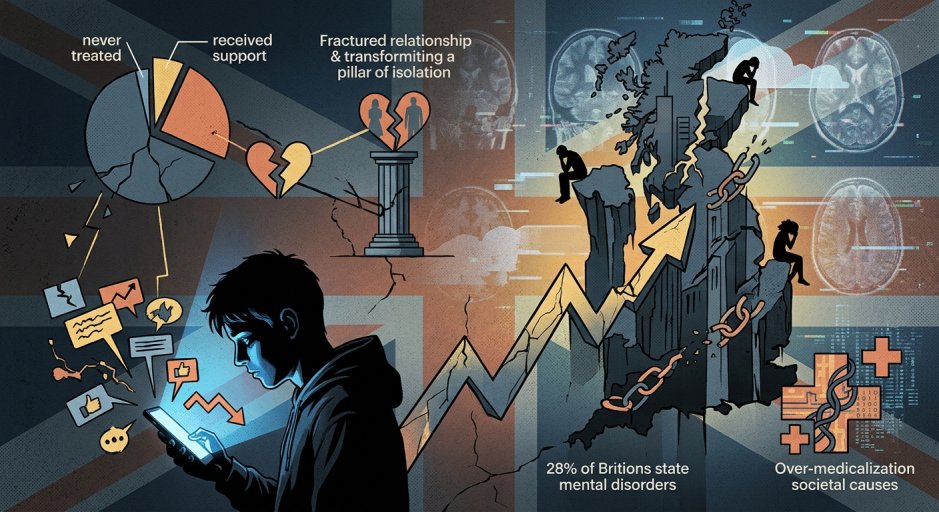
It is now statistically normal for a young person seeking mental health information online to report frequent thoughts of suicide. The data is unambiguous.
PLUS: The United Kingdom just earned the dubious distinction of having the worst mental health of any wealthy country, according to the OECD. The two stories are connected in ways the tech industry does not want to discuss.
The thing you need to understand about the numbers from Mental Health America is that they come from a help-seeking population—people actively searching for "mental health test" on Google or Bing. This is not a general population survey. It is a self-selected sample of people who already suspect something is wrong. That makes the data directional rather than nationally representative. But direction is everything when the trend line points straight up.
In 2025, 97,000 people under 18 took a depression screen on MHA's website. Over half—51%—reported suicidal ideation more than half the days or nearly every day in the prior two weeks. That is the highest rate since MHA launched its screening program in 2014. It represents a 3-percentage-point increase from 2024, which itself was elevated. The declines seen between 2022 and 2024, which offered a sliver of hope, have reversed.
This is not just a youth crisis. The Gallup depression tracker for early 2026 finds 19.1% of U.S. adults currently have or are being treated for depression—roughly 51 million people. That is near the record high of 20% set in the prior quarter. Among adults under 30, the rate is 28%.
And then there is the UK, where the OECD reports that 28% of Britons have a mental disorder—the highest among 44 wealthy countries. The UK's antidepressant consumption per person is exceeded only by Iceland and Portugal. Something structural is happening on that island, and it is not simply that Britons have become more willing to talk about their feelings.
The thing you need to understand about these cross-national comparisons is that they are notoriously squishy. Cultural differences in reporting, diagnostic thresholds, and healthcare access all distort the numbers. The OECD itself notes that the rise could partly reflect greater awareness. But the consistency across multiple datasets—MHA, Gallup, OECD, the Harvard Study of Adult Development—builds a case that is hard to dismiss.
It feels like we are normalizing a level of distress that would have been considered a public health emergency a generation ago.
The Youth Problem
Let me stay with the Mental Health America data, because it is the most granular and the most disturbing. The screening program has now collected over 32 million screens since 2014. That makes it the largest ongoing real-time mental health early identification program in the United States. When MHA says it sees a trend, the rest of the system tends to confirm it within a year or two.
The 2025 findings include a statistic that deserves more attention than it will receive: 56% of people who scored at risk for a mental health condition had never received treatment. That is more than half of an already distressed population walking around without professional support. The system is not just failing to keep up—it is failing to show up.
Among those who did screen, the top three self-reported contributors to their mental health problems were low self-esteem or self-image (50%), relationship problems (38%), and loneliness or isolation (34%). These are not biochemical disorders in the traditional sense. They are social and emotional conditions that the medical model is poorly equipped to address. You cannot prescribe your way out of loneliness.
The behavioral addiction data is also worth pausing on. Of people who took that screen, 40% said excessive internet use—including social media, videos, and doomscrolling—was their primary concern. Let that sink in. People are telling us, in real time, that the platforms they use are making them sick. And the industry response has been to offer screen time tools that are easily bypassed and content moderation policies that treat mental health as a brand safety issue rather than a human one.
Here is the question no one is asking: If we knew a food additive caused measurable harm to children's mental health, would we wait this long to regulate it? Or do we only move decisively when the harm is to a constituency with lobbying power?
The UK Anomaly
The OECD report is getting the most attention for its headline figure—28% of Britons have a mental disorder, ahead of the Netherlands at 27% and France at 23%. But the real story is the welfare state implications. The number of people receiving health-related benefits in the UK has risen from 2.8 million in 2019 to 4 million today, driven overwhelmingly by mental health and behavioral conditions. The cost has ballooned from £37 billion before the pandemic to an undisclosed higher figure that the Treasury is now desperate to contain.
Sir Tony Blair's institute recently proposed an "emergency handbrake" to cut benefits for people with mild depression, anxiety, or ADHD. This is the former prime minister who championed mental health awareness while in office, now arguing that the awareness campaign overshot and is bankrupting the system. There is a bitter irony here.
Joe Shalam at the Centre for Social Justice blamed "family breakdown" and "social media and screen time." He also warned of "diagnostic creep," noting that eight in 10 GPs now say everyday challenges have been over-medicalized. The OECD itself hedges on this point, noting that mental ill health "may have remained constant" while awareness and reporting increased.
But here is the problem with the over-medicalization critique: It assumes a baseline of stable distress that is being mislabeled. What if the baseline has actually shifted? What if the combination of economic precarity, eroded social institutions, and algorithmically amplified comparison is genuinely producing more suffering, not just more diagnosis?
For decades, the UK prided itself on its stiff upper lip—a cultural capacity for emotional endurance that was both a strength and a pathology. Not anymore.
The Loneliness Epidemic
The Harvard Study of Adult Development has been running for 87 years. Its central finding is robust across decades and generations: the quality of close relationships is the single strongest predictor of health, happiness, and longevity—more than wealth, IQ, class, or professional achievement.
One finding in particular should stop anyone who designs products for a living: relationship satisfaction at age 50 was a better predictor of physical health at age 80 than cholesterol levels at 50. The quality of your marriage in midlife tells doctors more about your future health than a standard blood test does.
This is the empirical ground on which the entire social media industry rests—or should rest. The platforms that promised to connect us have, for many people, delivered the opposite. The MHA data shows loneliness and isolation as a top contributor to mental health problems. The behavioral addiction data shows excessive internet use as the primary concern. The Gallup data shows that 33% of lonely adults report depression, compared to 13% of those who do not report loneliness.
The thing you need to understand about the tech industry's response is that it has been almost entirely performative. Meta has rolled out "take a break" prompts and teen account restrictions. TikTok has added wellness guides. Apple has screen time reports. None of these address the underlying business model, which rewards engagement over well-being. The metric that matters—time spent—is inversely correlated with the metric that should matter: genuine human connection.
The Harvard study is not ambiguous on this point. Lonely people's brains decline earlier. Cognitive function deteriorates faster. The social brain is an active brain, and isolation accelerates neurological deterioration. This is not soft science. This is longitudinal data with an 87-year track record.
What Actually Works
The good news, if you can find it, is that depression is highly treatable. The most effective approaches combine psychotherapy (especially cognitive behavioral therapy) with medication when needed, supported by exercise, sleep, and social connection. Most people see significant improvement within 8 to 12 weeks.
Mindfulness-Based Cognitive Therapy has strong evidence for preventing relapse. Exercise, at 30 minutes of aerobic activity three to five times per week, can be as effective as antidepressants in some cases. Online therapy has been validated as equally effective as in-person care for depression, which matters for people in areas with limited mental health resources.
But access remains the chokepoint. Fifty-six percent of at-risk screeners had never been treated. The U.S. mental health system treats mental health as the appendix of public health—funded in a separate silo, delivered through a separate workforce, covered by separate insurance carve-outs that pay clinicians a fraction of what the same hour of medical care commands.
The result is a system that knows what to do but cannot do it at scale. The science is clear. The system is not.
So where does this all leave us? I have been asking sources that question all week, and the answers are not reassuring. Mental Health Awareness Month 2026 arrives with record rates of distress, a treatment system that reaches less than half of those who need it, and a political environment that is more interested in cutting benefits than expanding access.
The theme this year is More Good Days, Together. That is a nice sentiment. But a sentiment is not a policy. It is not a funding allocation. It is not a redesign of the platforms that are feeding the crisis.
Talk to us
Send tips, comments, and questions. We read everything, even if we cannot respond to all of it.

Related Articles
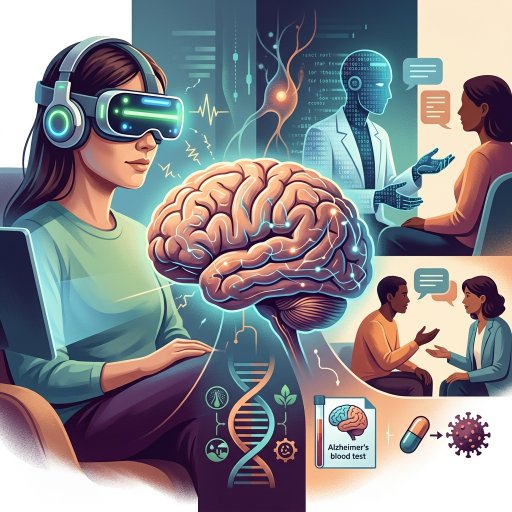
Mind Over Medicine: The Tech Revolution Reshaping Mental Health
The FDA just cleared a $600 headset for PTSD—while the VA’s MDMA trial, the one that might actually work for the hardest cases, won’t read out until 2030. The gap between the sales pitch and the science has never been wider.
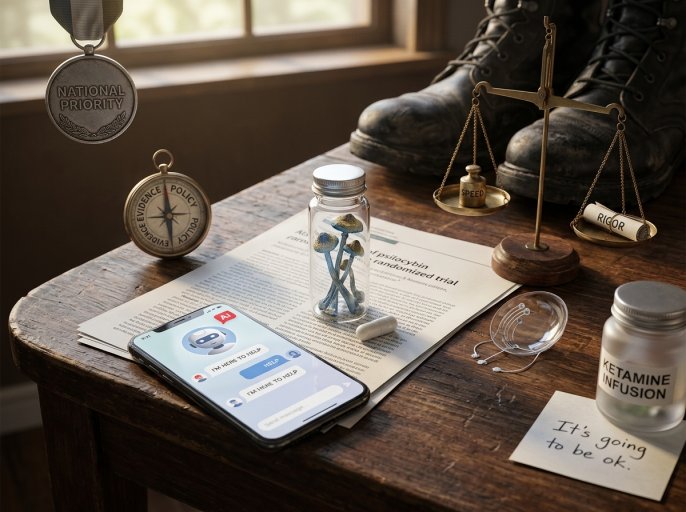
One-Dose Depression Relief
A single dose of psilocybin can provide rapid relief from depression, according to a new randomized trial—but the study also reveals the methodological challenges that haunt psychedelic research.
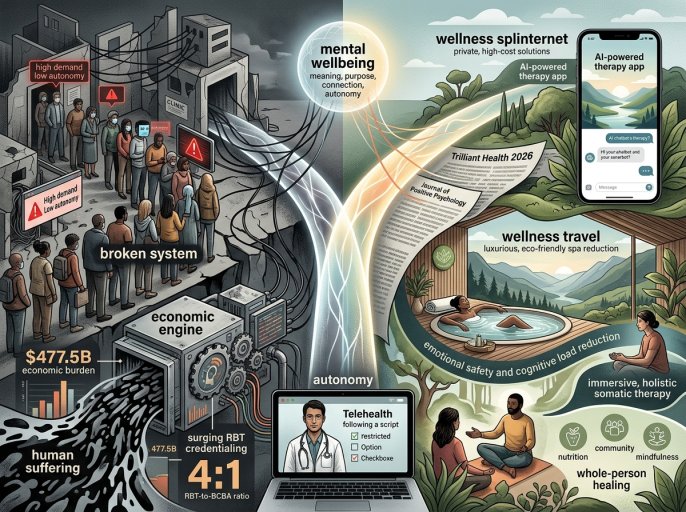
Redefining Mental Wellness
The United States is experiencing a historic behavioral health crisis—and the systems built to address it are being reshaped, not by clinical need, but by economic incentives, technological band-aids, and the logic of consumer markets.